What "cultural bias" means in an IQ test
An IQ (intelligence quotient) test tries to measure reasoning: the ability to spot patterns, solve new problems, and handle abstract information. The problem is that almost no question exists in a vacuum. It's written in a language, uses examples from a specific culture, and assumes background knowledge that isn't evenly distributed across the whole population.
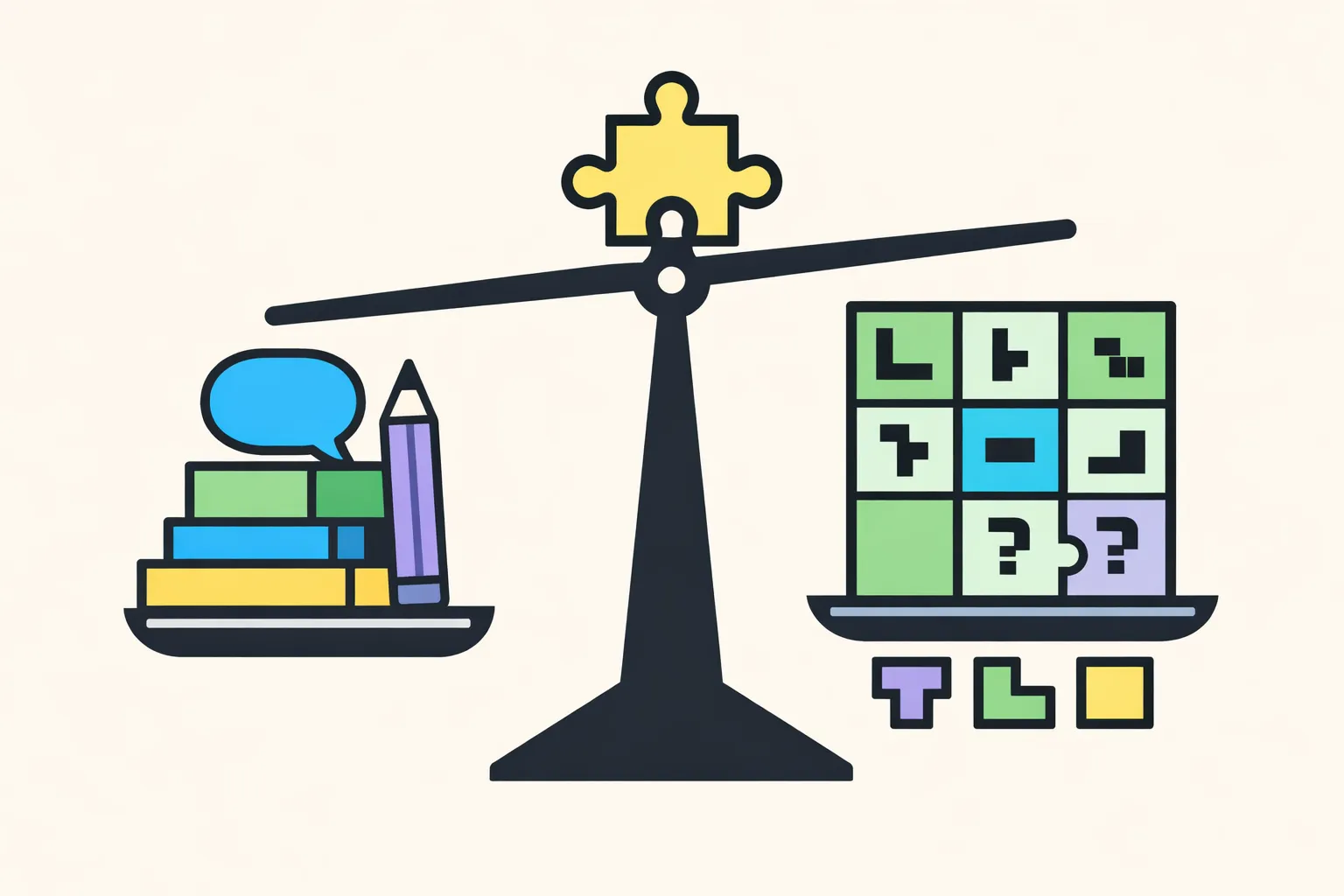
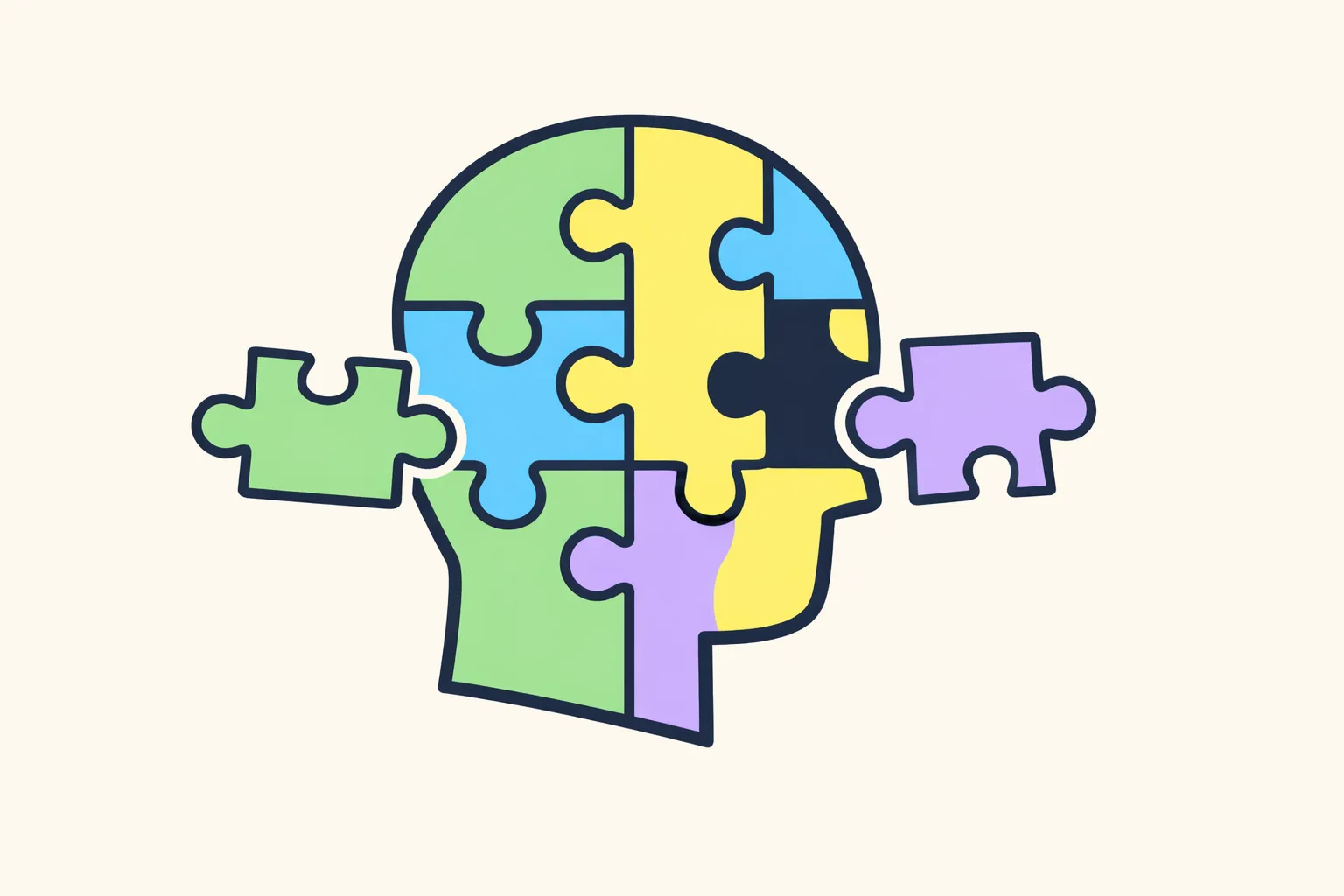
Cultural bias shows up when part of what a test measures isn't pure reasoning but familiarity with a context: vocabulary, references, the type of education someone received, or even the format of the exam itself (answer sheets, timers, multiple-choice questions). Two people with the exact same reasoning ability can get different scores if one of them is simply more comfortable with the language or the test format.
This doesn't mean IQ (a score that compares your reasoning ability to that of the general population) is some made-up, worthless number. It means a test's validity depends on how it was built and which population it was designed for. A test built and normed in one country, in one language, within one education system, doesn't automatically translate well to another context — even if the words themselves are translated literally.
Cultural bias was, in fact, one of the historical reasons "culture-free" tests were designed in the first place: instruments that try to isolate reasoning from everything else. But, as we'll see, "culture-free" is more of an aspiration than a fully achieved reality.
Why a test might measure schooling or language instead of reasoning
Think of a verbal analogy question like "doctor is to hospital as teacher is to ___." Answering it correctly requires knowing the vocabulary, understanding the logical relationship, and having had some experience with that kind of institution. If the language isn't your native one, or if your schooling looked different, you can get it wrong for reasons that have nothing to do with your actual reasoning ability.
The same goes for general-knowledge questions, math problems framed around "real-life" Western scenarios, or instructions that assume you already know how a multiple-choice test works and that you need to manage your time with a stopwatch. Our article on verbal reasoning and analogies goes deeper into how this type of question depends on language and verbal thinking style, not just vocabulary.
There are several typical sources of bias:
| Source of bias | Concrete example | What it distorts |
|---|---|---|
| Language | Verbal questions in a second language | Measures language proficiency, not reasoning |
| Schooling | Problems that assume curriculum content | Measures education received, not ability |
| Cultural references | Local names, objects, or customs | Favors those familiar with that context |
| Test format | Multiple choice, time limits, computer use | Favors those already familiar with test-taking |
| Comparison norms | Scoring scale built from a different population | Distorts the percentile, not the raw score |
This is exactly what we cover in online IQ tests in Spanish: many versions are literal translations that drag these problems along without anyone noticing.
What "culture-fair" tests actually are
A culture-fair test (also called "culture-free" or "culturally fair") is a type of test designed to reduce, as much as possible, its dependence on language, schooling, and specific cultural references. The main strategy is to use purely visual, abstract material: geometric shapes, patterns, and matrices instead of words or numbers tied to social context.
The best-known example is the Raven test, formally known as Raven's Progressive Matrices. It presents a matrix of shapes with a missing piece, and the test-taker has to pick, from several options, the one that logically completes the pattern. There are no words to translate and no cultural references to recognize — just spatial and logical relationships.
This approach rests on the concept of g factor (the general reasoning capacity underlying different cognitive tasks): the idea is that if you isolate abstract reasoning cleanly enough, you get closer to measuring that g factor and further from measuring acquired knowledge. Our article on abstract reasoning and matrices explains in detail how these questions are built and why they work reasonably well for this purpose.
Other historical examples include Cattell's Culture Fair Intelligence Test and various batteries that combine matrices, figure sequences, and spatial puzzles — all with the same goal: minimizing verbal and cultural load.
Why "culture-fair" doesn't mean "free of all context"
Here's the honest part that a lot of articles skip: no test is ever completely free of context. Even a matrix of shapes assumes things that are culturally learned, such as:
- Being familiar with the multiple-choice format and the idea of "pick the correct answer from several options."
- Having prior experience solving visual puzzles, which is more common in some education systems than others.
- Feeling comfortable working against the clock under pressure, a skill that's trained more in certain school environments.
- Understanding abstract instructions without narrative examples, which also depends on prior exposure to this kind of test.
Field studies have found that people with little or no formal schooling, or who've never taken a standardized test before, can perform worse on Raven's matrices simply from lack of practice with the format — not from lower reasoning ability. This is sometimes called "format bias," and it's distinct from language bias, but just as real.
That's why serious psychologists talk about tests that are "more culturally fair" or "reduced in cultural bias," and avoid the absolute label "culture-free." It's a matter of degree, not all-or-nothing. This distinction matters a lot if you ever come across marketing that promises a "100% neutral" test: that's an oversimplification.
Raven and cultural bias: what the real evidence says
The Raven test is the most-cited case study whenever people talk about Raven and bias. It's without question one of the instruments with the lowest verbal load out there, and it's been used in international comparisons precisely for that reason. But decades of accumulated evidence paint a nuanced picture, not a definitive solution.
On one hand, Raven noticeably reduces the weight of language and specific curriculum knowledge compared to tests loaded with vocabulary or general-knowledge questions. That makes it more suitable for comparing populations with different native languages or levels of formal schooling than a traditional verbal test would be.
On the other hand, average Raven scores have risen notably across generations in many countries — a well-documented phenomenon known as the Flynn effect. Part of that rise is attributed to greater exposure to abstract thinking and standardized tests in modern life (more schooling, more visual stimulation, more familiarity with puzzles), which suggests that even Raven captures some amount of "cultural training," not pure reasoning alone. You can dig deeper into this in our article on the Flynn effect.
The reasonable takeaway: Raven is a fairer tool than a verbal test, but it's not some magically neutral instrument. It remains sensitive, to a lesser degree, to prior exposure.
What to do with this information before you take a test online
If you're about to take an IQ test, whether out of curiosity or to compare your score, there are concrete ways to interpret your result with cultural bias in mind:
| Situation | What to keep in mind |
|---|---|
| The test is translated but not adapted | Verbal analogies or general-knowledge questions might penalize you without reflecting your actual reasoning |
| You've never taken this kind of test before | Your first score may land somewhat below your real ability, purely from lack of practice with the format |
| The test mostly uses matrices and figures | It's probably more comparable across people with different languages or backgrounds |
| You're comparing your score to someone in another country | Check whether both tests use the same norm (a comparison scale built from a population sample) |
| The test claims to be "100% culture-free" | Treat it with reasonable skepticism — nobody has fully pulled that off |
One practical tip: take the test in your native language whenever possible, and don't put too much weight on a single score if the format or references felt unfamiliar to you. The most useful data point isn't the isolated number — it's how it compares to your own history if you retake the test under similar conditions.
Real limits of culture-fair tests
Beyond bias itself, culture-fair tests have structural limits worth knowing before treating them as a perfect measure:
- They mostly measure fluid intelligence — the ability to reason with new material — leaving out, by design, crystallized intelligence (accumulated knowledge), which is also a legitimate part of cognitive ability. Read more in fluid vs. crystallized intelligence.
- They don't replace a professional evaluation. An online test, culture-fair or not, is still meant to be orientative. Clinical or diagnostic decisions require a full battery administered by a professional, which we cover in types of IQ tests: WAIS, Raven, and Cattell.
- They can bore or demotivate people used to more varied tests, which introduces a different kind of bias: one related to interest and sustained attention.
- Norms still matter. Even a test made of shapes needs a representative normalization sample; if that sample doesn't reflect your population well, the percentile you get can be misleading.
Bottom line: culture-fair design solves one problem but introduces new nuances that also need watching.
Key takeaways
- Cultural bias happens when a test measures language, schooling, or familiarity with the format instead of pure reasoning.
- Culture-fair tests, like Raven's, use abstract matrices and shapes to reduce that dependence on language and culture.
- No test is ever fully free of context: the exam format itself is already a learned cultural factor.
- The Flynn effect suggests that even Raven reflects some modern exposure to abstract thinking, not just innate ability.
- The most useful way to interpret your score is to compare it to yourself over time, and stay skeptical of any test advertised as "100% neutral."
If all this has you curious, go ahead and take the free IQ test from iqmetria and see your result with some perspective: it's an orientative, self-discovery tool, not a clinical diagnosis or a perfect, absolute measure of your ability.
FAQ
What exactly is cultural bias in an IQ test?+
It's when a test ends up measuring language skills, schooling, or familiarity with the test format rather than pure reasoning ability. Two people with the same reasoning capacity can score differently if one of them is simply more familiar with the language or the format used.
Is the Raven test completely free of cultural bias?+
No. Raven's Progressive Matrices greatly reduce the influence of language and curriculum knowledge, but they're still affected by things like familiarity with multiple-choice formats and prior exposure to visual puzzles. No test is 100% context-free.
Why do IQ scores keep rising over generations (the Flynn effect)?+
Part of this rise is linked to greater modern exposure to abstract thinking, more schooling, and more familiarity with standardized tests and puzzles — suggesting that even culture-fair tests pick up some cultural training, not just innate ability.
Should I trust a test that claims to be '100% culture-free'?+
Treat that claim with healthy skepticism. Reducing cultural bias is possible, and tools like Raven do it well, but no test has ever eliminated context completely — the format of the exam itself is already a learned cultural factor.
What's the best way to interpret my IQ test score given cultural bias?+
Take the test in your native language when possible, don't give too much weight to a single score if the format felt unfamiliar, and focus on comparing your results to your own history over time rather than treating one number as absolute. Remember this is an orientative tool, not a clinical or medical diagnosis.